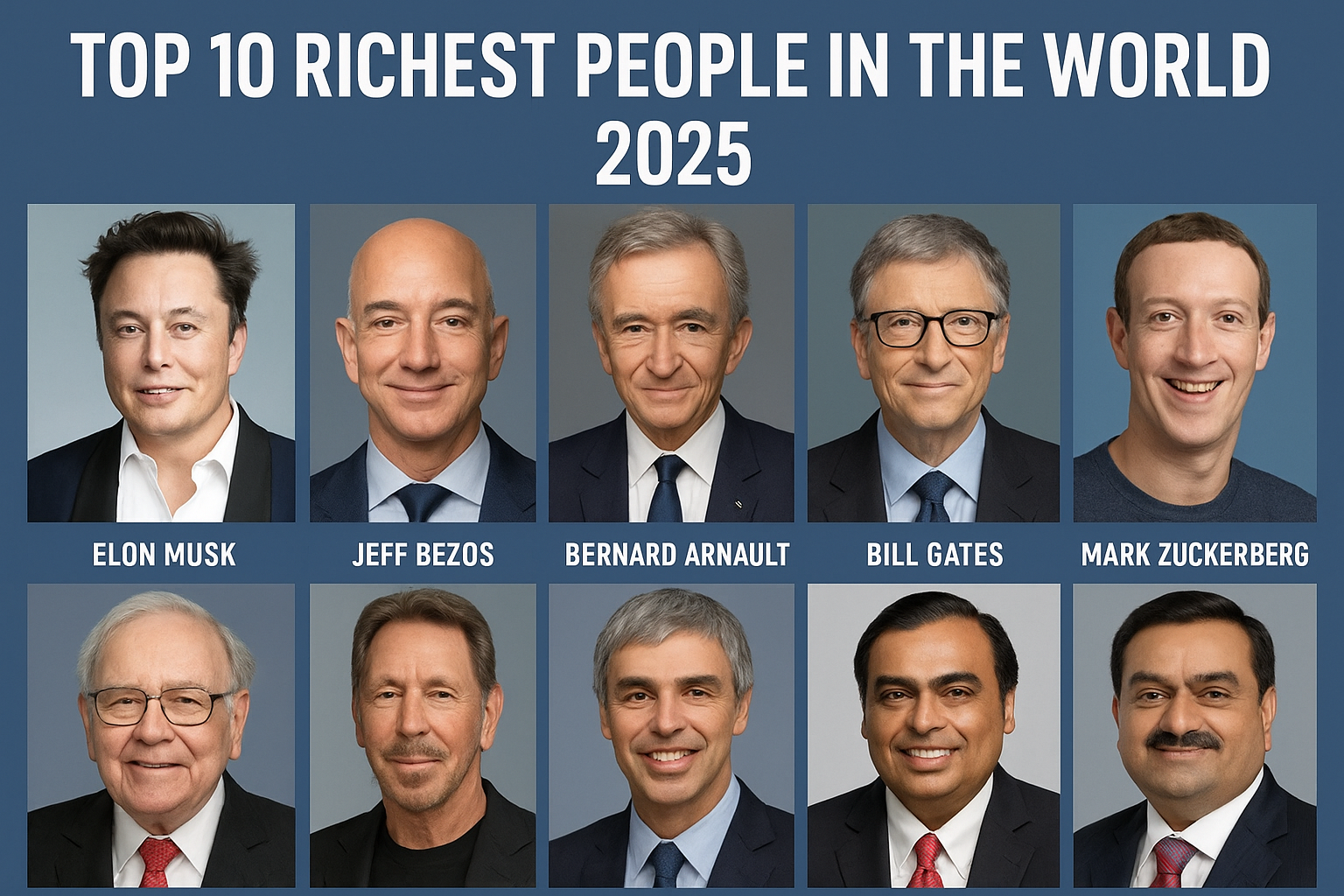
The world’s richest people represent a mix of tech moguls, investors, and industrial titans. According to Forbes (using data as of March 7, 2025) Forbes+2The Indian Express+2, here are the top 10 richest individuals — along with their stories, companies, and how they built their vast fortunes.
1. Elon Musk

- Net Worth: ~$342 billion Forbes+1
- Country: United States
- Source of Wealth / Companies: Tesla, SpaceX, xAI, The Boring Company
Bio & Background:
Elon Musk, born in South Africa, is a serial entrepreneur known for founding and leading some of the most forward-looking companies on the planet. Musk co-founded Zip2, X.com (which later became PayPal), and then launched Tesla, the famous electric car company. He also founded SpaceX, which is pioneering reusable rockets and planning missions to Mars.
In 2025, a large portion of his wealth comes from his holdings in Tesla and SpaceX, as well as his work in artificial intelligence with xAI and infrastructure with The Boring Company. Musk’s vision of a multi-planetary future, combined with his innovations in EVs (electric vehicles), solar energy, and AI, has allowed him to accumulate one of the largest fortunes in the world.
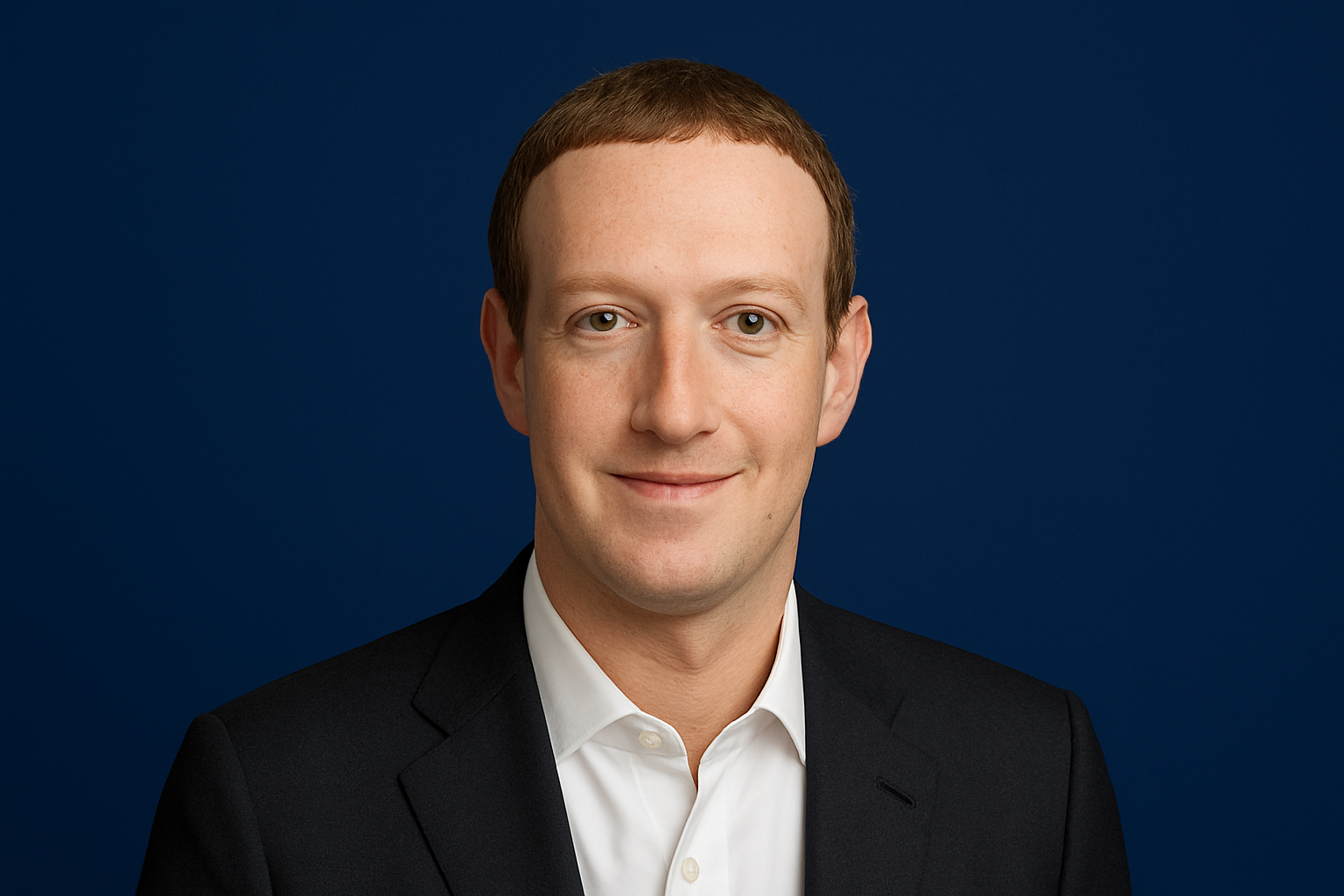
2. Mark Zuckerberg
- Net Worth: ~$216 billion The Indian Express+1
- Country: United States
- Source of Wealth / Companies: Meta Platforms (Facebook, Instagram, WhatsApp)
Bio & Background:
Mark Zuckerberg co-founded Facebook while studying at Harvard University. Over time, Facebook evolved into Meta Platforms, which also includes Instagram, WhatsApp, and several other projects (such as its investments in AR/VR). Zuckerberg’s role as CEO and his large shareholding in Meta have made him one of the richest people in the world.
Meta’s business model is based heavily on advertising, and its platforms are used by billions globally. Under his leadership, the company has constantly pushed into new technologies and social experiences, giving Zuckerberg sustained influence and wealth.
3. Jeff Bezos
- Net Worth: ~$215 billion The Indian Express
- Country: United States
- Source of Wealth / Companies: Amazon, Blue Origin, The Washington Post
Bio & Background:
Jeff Bezos founded Amazon in 1994 — initially as an online bookstore — and turned it into one of the largest e-commerce and cloud computing companies in the world. Amazon Web Services (AWS) plays a huge role in the company’s profits. Over the years, Bezos also founded Blue Origin, a private space exploration company, and owns The Washington Post.
In 2025, Bezos remains a major stakeholder in Amazon, which continues to grow globally. His investments in space and media contribute to his diversified portfolio and long-term vision beyond just retail.
4. Larry Ellison

- Net Worth: ~$192 billion The Indian Express+1
- Country: United States
- Source of Wealth / Company: Oracle Corporation
Bio & Background:
Larry Ellison co-founded Oracle in 1977, a major enterprise software company that specializes in database software, cloud systems, and business applications. He has served in various leadership roles, including CEO and CTO, and continues to hold a large stake in Oracle.
Ellison’s wealth comes from his long-term ownership in Oracle, which remains a powerhouse in enterprise IT. His vision of scalable database solutions and cloud infrastructure helped transform how large companies manage data and run critical operations.
5. Bernard Arnault & Family

- Net Worth: ~$178 billion (or more, depending on source) The Indian Express+1
- Country: France
- Source of Wealth / Companies: LVMH (Louis Vuitton, Moët & Chandon, Sephora, etc.)
Bio & Background:
Bernard Arnault is the chairman and CEO of LVMH, the world’s largest luxury goods conglomerate. LVMH owns dozens of luxury brands such as Louis Vuitton, Christian Dior, Givenchy, Dom Pérignon, Tiffany & Co., and more. Arnault’s leadership has turned LVMH into an empire controlling fashion, cosmetics, wines, watches, and leather goods. Forbes
Arnault’s wealth is deeply tied to the luxury sector. He and his family own a large share of LVMH, and Arnault has made strategic acquisitions over decades to build one of the most valuable consumer-goods companies in the world.
6. Warren Buffett

- Net Worth: ~$154 billion The Indian Express
- Country: United States
- Source of Wealth / Companies: Berkshire Hathaway
Bio & Background:
Warren Buffett, known as the “Oracle of Omaha,” is one of the most successful investors of all time. He runs Berkshire Hathaway, a conglomerate that owns companies in insurance, utilities, railroads, manufacturing, and more. Buffett’s investment philosophy of value investing — buying great companies at a good price and holding them long-term — has earned him legendary status.
Buffett’s wealth is largely tied to his long-term investments, both through Berkshire Hathaway’s holdings and his personal portfolio. He is also known for his philanthropy, pledging to give away much of his fortune.
7. Larry Page

- Net Worth: ~$144 billion The Indian Express
- Country: United States
- Source of Wealth / Company: Alphabet Inc. (Google)
Bio & Background:
Larry Page co-founded Google with Sergey Brin while they were PhD students at Stanford University. Google started as a search engine but expanded into many areas: online advertising, cloud computing, autonomous vehicles (Waymo), and more. Google’s parent company, Alphabet Inc., now holds many of these ventures.
Page stepped back from day-to-day operational roles but still holds a significant stake in Alphabet. His vision in creating a company that organizes the world’s information has led to massive wealth as Alphabet continues to grow globally.
8. Sergey Brin

- Net Worth: ~$138 billion The Indian Express
- Country: United States
- Source of Wealth / Company: Alphabet Inc. (Google)
Bio & Background:
Sergey Brin co-founded Google alongside Larry Page. Brin played a crucial role in the company’s research and engineering innovation, especially in early search algorithms, and later in projects like self-driving cars and moonshot research under Alphabet’s “Other Bets” division.
Like Page, Brin stepped away from daily operations but remains deeply invested in Alphabet. His stake in the company continues to contribute to his enormous net worth, and his commitment to innovation continues to shape Alphabet’s future.
9. Jensen Huang

- Net Worth: ~$158+ billion (various sources) Benzinga+2Forbes+2
- Country: United States / Taiwan (heritage)
- Source of Wealth / Company: NVIDIA
Bio & Background:
Jensen Huang co-founded NVIDIA in 1993 and has been its CEO and president since. He owns roughly 3–3.7% of the company. Forbes+2cnbc.com+2 Under his leadership, NVIDIA’s graphics processing units (GPUs) played a critical role in the evolution of gaming, and now they are central to the AI revolution and data-center technology.
In 2025, NVIDIA reached a market capitalization of $4 trillion at one point, boosting Huang’s net worth dramatically. mint The demand for AI chips (especially for large language models and advanced computing) has made NVIDIA one of the most valuable companies globally.
Huang is also noted for his philanthropic activity — he has donated significant amounts to universities, including Oregon State University and Stanford University. Forbes
10. Steve Ballmer

- Net Worth: ~$150+ billion (Bloomberg estimate) Bloomberg
- Country: United States
- Source of Wealth / Companies: Microsoft
Bio & Background:
Steve Ballmer was the CEO of Microsoft from 2000 to 2014. He joined Microsoft in its early days and played a major role in scaling the company. Today, a significant portion of his wealth comes from his Microsoft stock holdings (he remains one of the top individual shareholders). Bloomberg
Beyond Microsoft, Ballmer owns the Los Angeles Clippers, an NBA basketball team, which he bought in 2014. Wikipedia He is also known for his philanthropic endeavors through the Ballmer Group, which focuses on improving economic mobility and supporting underserved communities.
Analysis: What These Billionaires Have in Common
- Tech Dominance:
- Most of the richest people in 2025 are tech founders or investors (Musk, Zuckerberg, Page, Brin, Huang, Ballmer).
- Their companies are not just profitable but also driving future tech trends — AI, electric vehicles, cloud computing, and space.
- Equity over Salary:
- Their wealth is heavily tied to stock/equity. For example, Jensen Huang’s net worth is mostly from his NVIDIA shares. Benzinga+1
- This means their fortunes fluctuate with the stock market.
- Long-Term Vision:
- They are not just building companies for short-term profit. Elon Musk (SpaceX), Larry Page (Waymo), and Brin (moonshot research) invest in long-term, high-risk, high-reward projects.
- This vision helps them stay relevant and continue growing their wealth.
- Philanthropy:
- Many of them are highly philanthropic — Buffett has pledged a huge part of his wealth, Huang donates to universities, Ballmer contributes via his foundation, etc.
- Global Influence:
- Their companies influence billions of lives: through social media (Meta), search (Google), luxury (LVMH), and hardware (NVIDIA, Tesla).
Why 2025 Is a Significant Year
- According to Forbes, the combined total wealth of the world’s billionaires in 2025 is $16.1 trillion, up nearly $2 trillion from the previous year. Forbes
- The surge is driven in large part by the AI boom, which has lifted the value of companies like NVIDIA to unprecedented heights. mint
- Stock market performance continues to significantly influence the net worth of these richest people, more than ever before.
Risks & Challenges to Wealth
- Since most of these fortunes are tied to publicly traded companies, market volatility can greatly affect their net worth.
- Regulatory and geopolitical risks: For example, global trade tensions could impact tech exports.
- Business risk: Companies like Tesla, Amazon, and NVIDIA face competition, innovation risk, and supply chain problems.
- Public perception and wealth taxation: Big fortunes raise debates about inequality, wealth taxes, and corporate governance.
Conclusion
The top 10 richest people in the world in 2025 are not just ultra-wealthy; they’re powerful visionaries who shape technology, consumer behavior, and global markets. From Elon Musk’s space ambitions to Jensen Huang’s AI revolution, these individuals aren’t just riding the wave — they’re creating it.
As we move further into the era of artificial intelligence, renewable energy, and digital transformation, the influence and wealth of these billionaires are likely to remain pivotal. Understanding their business models, investments, and long-term goals gives insight into where the global economy could head next.