Introduction
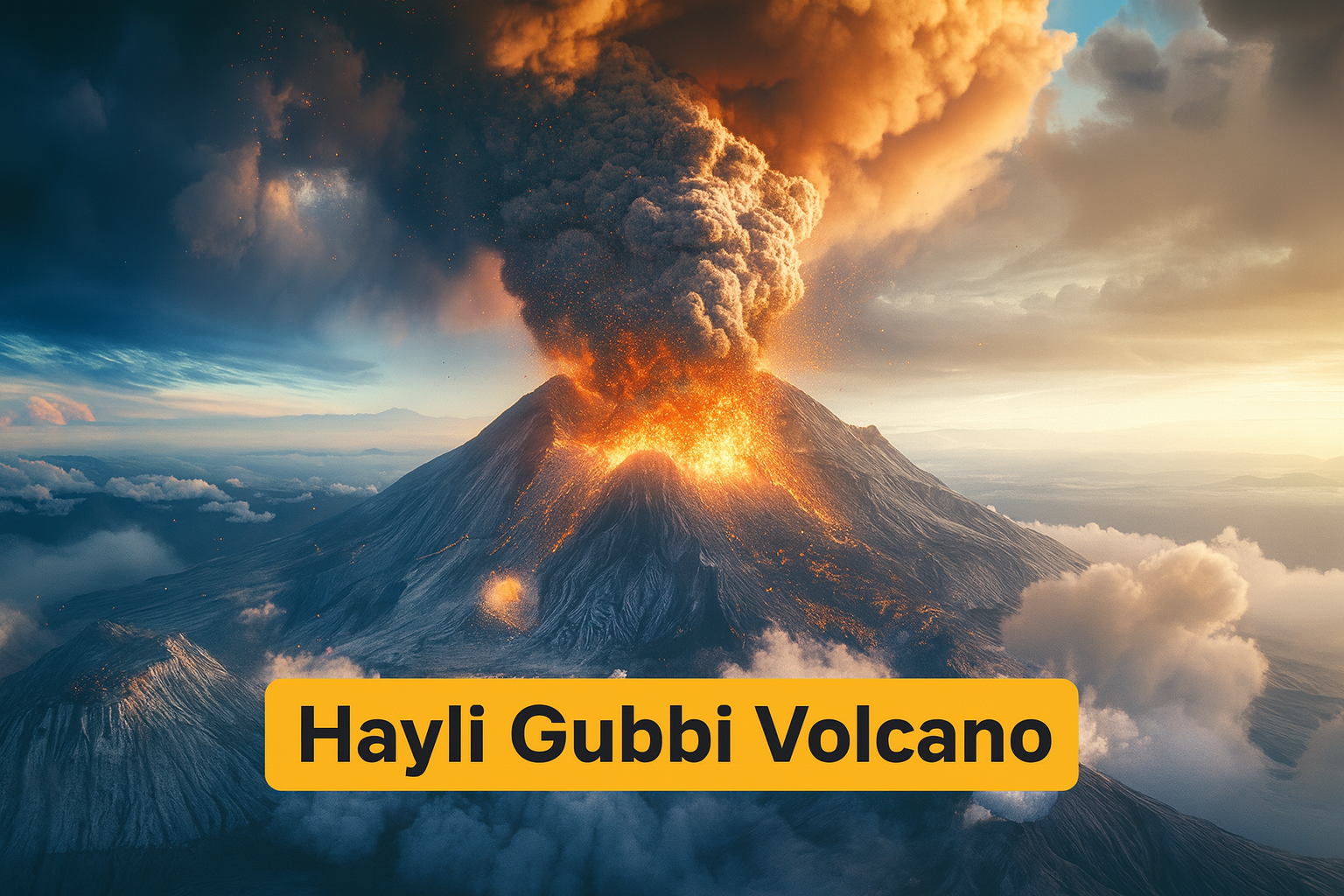
The sudden eruption of the Hayli Gubbi volcano has shocked scientists worldwide, especially after remaining dormant for more than 12,000 years. Located in Ethiopia’s Afar region, this volcano is now at the center of global attention due to its unexpected activity, geological importance, and the impact it could have on nearby communities.
According to a BBC report, researchers were stunned when seismic movements signaled that Hayli Gubbi—once believed to be inactive—was waking up. This eruption has sparked new studies into ancient volcanic systems, tectonic activity in the East African Rift, and the behavior of long-silent volcanoes.
In this article, we explore the history, science, impact, and mysteries surrounding the Hayli Gubbi eruption, breaking it down into simple and informative sections for easy understanding.
What Is the Hayli Gubbi Volcano?
● Geological Background of Hayli Gubbi
The Hayli Gubbi volcano is part of the East African Rift System—one of the world’s most geologically active regions.
This rift is slowly splitting the African continent into two plates, creating volcanic activity across Ethiopia, Kenya, Tanzania, and beyond.
Hayli Gubbi itself was categorized as a dormant shield volcano with no recorded eruptions in human history. Many researchers believed it had completed its natural life cycle.
● Location and Physical Features
Located in the Afar Depression, the volcano sits within one of Earth’s lowest and hottest regions.
This area is known for its dramatic geological features, including lava lakes, geysers, salt flats, and sulfur springs.
Hayli Gubbi’s broad slopes and wide caldera indicate that its eruptions were historically slow-flowing but massive in scale.
● Why Scientists Overlooked It for Decades
Since the volcano had no previous activity in recent history, researchers focused on more active Ethiopian volcanoes like Erta Ale and Dallol.
Seismographic tools were rarely set around Hayli Gubbi, contributing to the surprise when early-2025 tremors began.
The 12,000-Year Dormancy: Understanding Its Past
● How Long-Dormant Volcanoes Work
Dormancy in volcanoes does not mean extinction.
A volcano can stay inactive for thousands of years before reawakening, depending on tectonic pressure, magma movement, and underground heat systems.
Hayli Gubbi’s dormancy lasted approximately 12,000 years—a period scientists determined through ancient lava dating and carbon analysis.
● What Caused the Dormancy to End?
Experts believe the eruption was triggered by:
- A shift in tectonic plates beneath the East African Rift
- Rising magma reaching shallow chambers
- Deep fractures allowing heat and lava to travel upward
A BBC geological analysis noted that small earthquakes detected weeks before the eruption were early warning signs.
● Signs That Were Missed
Local communities reported rumbling sounds and warm ground months earlier.
Because the area is remote and sparsely monitored, these warnings didn’t reach volcanologists in time.
The Recent Eruption: What Happened?
● Timeline of the Eruption
The eruption began with minor seismic shocks, followed by ash emissions and the release of volcanic gases.
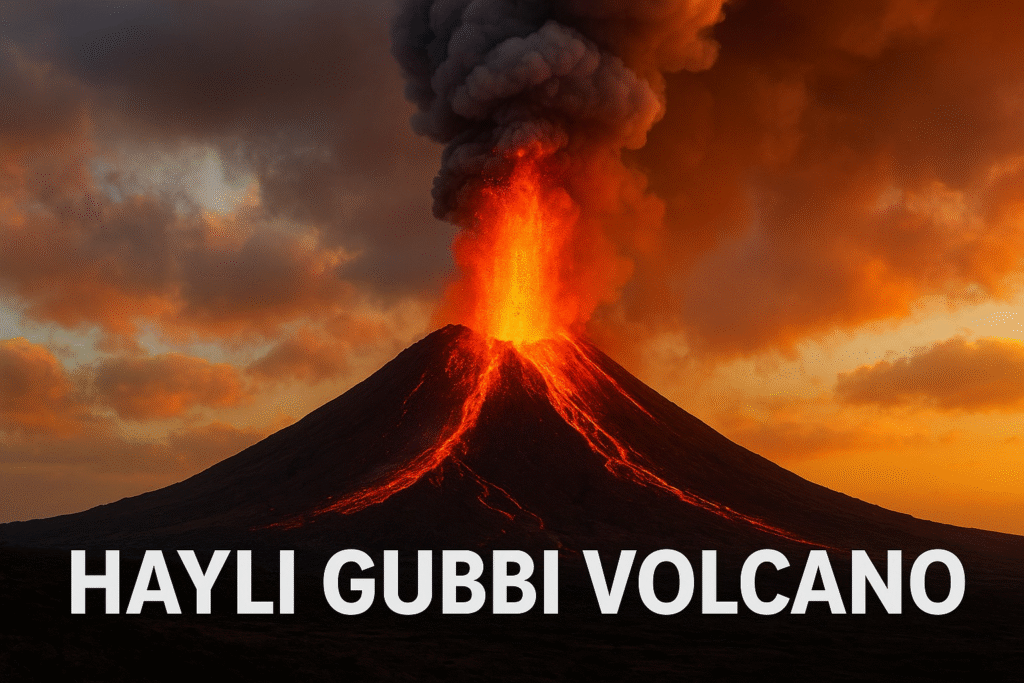
Within hours, lava began flowing from multiple vents, creating a glowing river visible from miles away.
Scientists rushed to the scene, documenting the first eruption of Hayli Gubbi in recorded history.
● Environmental Impact
The eruption produced:
- Thick ash clouds
- Lava flows spreading across uninhabited areas
- High sulfur emissions
- Air quality concerns for nearby towns
Fortunately, the immediate region had minimal population exposure, reducing human casualties.
● BBC Report Highlights
According to BBC field reports:
- Lava fountains were recorded reaching significant heights
- Satellite images showed rapid land formation changes
- Emergency teams were dispatched to monitor air and soil quality
These findings helped shape global understanding of how dormant volcanoes awaken.
Why the Hayli Gubbi Volcano Matters Globally
● Impact on Volcanology Research
The eruption is a rare opportunity for scientists to study the rebirth of a long-sleeping volcano.
It provides insight into volcanic systems that were once considered dead.
New research may help improve prediction models for other dormant volcanoes worldwide.
● Importance for East African Rift Studies
The East African Rift is gradually tearing the continent apart.
Hayli Gubbi’s eruption confirms increasing tectonic activity in the region, supporting theories that a new ocean may form there over millions of years.
● Lessons for Global Monitoring Systems
The eruption exposed weaknesses in volcanic monitoring networks.
Improved technology—such as satellite detection and AI-based seismic analysis—could help prevent future surprises.
The Historical Significance of Hayli Gubbi
● Ancient Volcanic Activity
Historical maps and geological surveys show that Hayli Gubbi was once a highly active volcano thousands of years ago.
Its lava spread formed much of the surrounding Afar landscape.
● Cultural Meaning to Local Communities
Some local tribes consider volcanic mountains sacred.
Legends describe Hayli Gubbi as a “sleeping giant,” which now seems more accurate than ever.
● Why No Historical Records Exist
The region’s ancient inhabitants did not have written languages.
Oral history may hold clues, but modern researchers are still working to decode them.
Scientific Reactions and Global Response
● Scientists Scrambling to Understand the Eruption
Researchers from around the world have arrived in Ethiopia, gathering:
- Lava samples
- Gas emissions
- Seismic data
- Satellite imaging
This eruption is expected to generate years of scientific research.
● Government and Humanitarian Response
The Ethiopian government issued travel warnings and relocated several nearby families.
International aid groups assisted with emergency preparedness.
● Future Monitoring and Safety Plans
New sensors and monitoring stations are being installed around Hayli Gubbi.
These tools will help track volcanic activity and provide early warnings in case of future eruptions.
The Future of Hayli Gubbi Volcano
● Will It Erupt Again?
Scientists believe that Hayli Gubbi may continue to show activity for months or years.
Once pressure builds in a magma chamber, new vents can form unexpectedly.
● Potential for Long-Term Change
The eruption could alter:
- Local geography
- Soil composition
- Air quality
- Migration patterns of animals
Some changes may benefit agriculture in the long run.
● Preparing for Uncertain Outcomes
Officials and researchers are encouraging ongoing observation, community awareness, and educational efforts to understand the risks.
Conclusion
The unexpected eruption of the Hayli Gubbi volcano after 12,000 years has become one of the most important geological events of the decade.
By revealing how dormant volcanoes can reactivate, it emphasizes the need for better monitoring, advanced technology, and global scientific cooperation.
From its geological history to the dramatic awakening documented by BBC reports, Hayli Gubbi reminds us that Earth is constantly changing beneath our feet—often in ways we least expect.